Monday, September 23, 2013

Common Mistakes #2: Less is More

Another common mistake I see is beginning authors piling on the images, or metaphors, or reusing jokes. For example, the protagonist will ride his trusty steed into a forest, and the author will start a description of the forest with a nice image of the trees—and then another, and another and another and another until one cannot see the forest for the imagery....[sorry]. What I mean is, the first image will be striking, and the reader will think, "nice image!" and then read another couple of words and find another striking image, and think, "oh wow, another nice image—I can really see it;" and then bump into yet another image and think, "oh, that's, uh, vivid," and then another image and think, "say, this is really quite dense description". By the next image the reader is either getting impatient to get back to the story—which has likely ground to a halt—or going, "wait, what was that about the leaves again?", because one can only take in so many images piled atop one another before hitting sensory overload. The more images stacked up, the weaker each one becomes. One cannot emphasize the leaves and the trunks and the branches and the roots and the piles of dead leaves and the moss and the ants and that deer over there and the way the sun glints through the trees and the way the pattern of light dapples the forest floor and keep on to cover the entire ecology of the forest...because if everything is emphasized, nothing is.

Or, to put it another way, while it might have taken the writer three days to shape that description of the forest, and so had time to savor each carefully crafted image, the reader is going past at a 1,000 words a minute. Okay, maybe if you're Proust or James Joyce, readers will slow down for you, but, um, you're not. Not yet, anyway. So less is more. Out of the ten images you've come up with, pick the best one; prune the rest. This will usually make the scene—and your writing—leaner, tighter and so much better.

Same with metaphors, jokes, and even surplus characters. Had a manuscript across my desk yesterday where a writer used essentially the same line twice within three pages. It was funny and it built up the speaker's character, but you can't get a laugh out of the same punchline twice in three pages; one of them has to go. Later that same day, I was reading a another manuscript where the author introduced several characters, spent time describing them, building up their personalities, but then didn't actually have them do anything in the story. They were just sort of there...except for one character who sat out the entire story in the barn, and so wasn't even there. Maybe save the barn character for another story.... Just because you thought of an image, or a metaphor or a character, or a funny line doesn't mean you have to use it. Keep to the point, keep things moving forward, and restrict yourself to your very best material.

Wednesday, September 18, 2013

Common Mistakes #1

Most common mistake I see is authors starting the story way too early. They need to start with 'initiating incident', the thing that makes today different from yesterday for the characters. Starting with the 'before' picture does NOT work, because before was ordinary life and we do not want to read about ordinary life because we are living our own ordinary lives, thank you very much, and we bought the book for a taste of something different. Start with the action scene, start with the characters under threat and keep them under threat as the action and tension builds...no one wants to read their backstory, at least not in the first 50 pages.

Monday, September 2, 2013

SF Canada

I was googling for something else this evening and came across this post from SF Canada blog for November 5, 2012. I don't think they'll mind my reposting it here:

      World Fantasy Convention 2012 was hosted in Toronto, Ontario Nov. 1-4, where SF Canada members restated their 1992 corporate charter to approve continuance into the new Canada Not-for-profit Corporations Act. Shown here wielding a ceremonial blade is Dr. Robert Runté from the University of Lethbridge, one of the founding members of SF Canada, along with current president Steve Stanton.

SF Canada was founded at ConText89, so that makes it 24 years old. I was one of the instigators, writing to every SF author in the country to attend the founding meeting, and it worked pretty well, with about thirty authors showing up and signing up. Candas Jane Dorsey was elected the first President, and I think I was Secretary. I ran the newsletter, anyway. It took a couple of years after that to get incorporated, but it has worked out pretty well. I highly recommend SF Canada to any authors in the fantasy, science fiction or speculative fiction genres.

Self-Editing

Pretty good article on editing one's own manuscripts by Kristen Lamb Sept 2, 2013 on Huffington Post:

Six Easy Tips for Self-Editing Your Fiction.

Not everyone can afford an editor, so knowing how to edit one's manuscript oneself is crucial. But Lamb also makes the point that even if one can afford a professional edit before self-publishing or submitting the manuscript to a traditional publisher, you get more for your money if you can edit out the obvious mistakes before hiring a professional:

      There are many editors who charge by the hour. If they're spending their time fixing blunders you could've easily repaired yourself, you're burning cash and time. Yet, correct these problems, and editors can more easily get to the meat of your novel. This means you will spend less money and get far higher value.
Sound advice!

I was sufficiently impressed by this article that I followed it back to Lamb's personal blog which also turned out to be pretty good. Funny and insightful, even though I don't always agree. But enough to make the input useful. Check her out.

Saturday, August 3, 2013

Errors

Had an urgent email today from an author who had awakened in the middle of the night with the nagging feeling there was something wrong with the manuscript we'd just sent off to the publisher. The author had started work on the sequel and couldn't remember whether one of the minor (i.e., non-speaking, almost entirely off-stage) characters was the King's sister or daughter. So went to check the manuscript and found that the character was sometimes referred to as the sister, and sometimes as the daughter; in one glaring example, even in the same paragraph.

Oops.

That, of course, is exactly the kind of error editors are supposed to catch. I hadn't. Worse, when I went to correct the error, had to be reminded by the author I'd also have to change "brother-in-law" to "son-in-law" throughout.

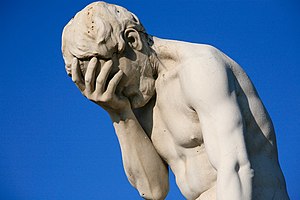
Face:Palm

Why I hadn't caught that, I'll never know. Lack of sleep, I suppose, or rushing, or my faith that this was one of those very few authors who didn't make mistakes. (Also, author's spouse is incredibly good copy editor, so usually submission is pretty clean before it leaves the author's hands.) But still, I'm pretty embarrassed.

Fortunately, we caught it before it went to layout (i.e., typesetting). Would like to think it would have been caught at the Galley stage anyway, but the sooner one can eliminate errors, the better.

Of course, mistakes are inevitable. If an editor claims they never let anything slip through, they're lying.

Why there are galleys. Even when editors catch mistakes--say, notice that the spelling of a minor character is different in different parts of the book--it often turns out that was the mistake: there were two different characters with similar names. You know? So authors have to be given opportunity to read through the book one last time before it goes to press. And even then, there are always things that slip through. Usually, right there, front and center, at any random page you first open the final published book. *Sigh*

The worst mistake I was (tangentially) involved in was back when I was working for the government as a Test Developer (i.e., test writer/editor). A Grade 12 Mathematics examination went out with one of the equations missing an exponent, which meant that there was no correct answer for that multiple-choice question. My boss was assigned to find out what went wrong, the implication being that heads were about to roll.

He traced the error back to the original manuscript, but the question wasn't why the author made a mistake (everybody makes mistakes) but why it wasn't caught in all the checks that were built into the process. The provincial exams were the most heavily reviewed and edited documents on Earth, so how did the error get through?

When my boss followed the trail of signatures, over 36 people had signed off on the document. 36 people. I was one of the Test Developers who had reviewed the test, but I pointed out that as a Social Studies guy, I had no clue about the actual math (hey, it was the advanced Grade 12 course. Calculus. I had no idea what the test was asking, let alone what the answer might be.) My job had been to just proof for format and so on. It had checked out on that. But even allowing that some of the reviewers were checking for other stuff, it's still astounding that with over 25-30 people actually checking for content, no one caught such an obvious error.

After much hand-wringing and discussion of how to rectify for future, management cut the number of people reviewing the examination to five; one each at each distinct step. Because it turned out with 36 people, each reviewer was subconsciously thinking, "I can do this fast because if there was anything, one of the others would have caught it by now." No one could be held responsible because there were too many people to share the blame. But with five checks, one at each stage, someone was specifically responsible for it being perfect at that stage. Actually turned out to work a lot better. Another example of less is more.

So the moral here is, it's better if your editor starts from the assumption that you're an idiot. That way, they'll check everything with obsessive care. Thinking you might actually know something about punctuation, Canadian spelling, consistency and so on just leads to errors.

Friday, August 2, 2013

Currently on my Desk

The first two chapters of the just published The Tattooed Witch by Susan MacGregor (Five Rivers Publishing, July 2013) are available on Susan's site, Suzenyms. I was the editor for the final version of this novel, though another editorial team had already done the initial developmental work on this one, so it was pretty clean when I got it. And of course, Susan is herself a well known editor (with On Spec Magazine), so I imagine it was pretty smooth writing from the get go. Really looking forward to editing the next two books in this series, the second volume of which is already waiting on my desk.

Currently in my "to do" pile:

  • have to write the "Afterword" for Leslie Gadallah's The Legend of Sarah (due out Winter 2014)
  • final edit on My Life as a Troll by Susan Bohnet (due out Spring 2014
  • initial edit on Alicia Hargreaves The Secret Women's Club
  • initial edit on Shakespeare for Readers' Theatre, Volume 2 by John Poulsen
  • initial edit on The Tatooded Seer by Susan MacGregor
  • second volume of Micthell Plested's Mik Murdoch: Boy Superhero series
  • initial re-edits on 21 books in the Prime Ministers of Canada series

I also have two solicited manuscripts for review which I can't talk about until/if we sign contracts. And I'm off to When Words Collide convention in Calgary next weekend (August 9-11, 2013) where a number of authors have signed up to pitch books to Five Rivers, so may get one or two more submissions there. (WWC is a great convention for authors and editors: I get more business done there than at any other convention.)

(Okay, not an actual picture of my desk. The actual manuscripts are all Word Files on my computer. Nobody accepts paper manuscripts anymore. But, you know, there's no photo for that.)

So...29 manuscripts currently on my desk, but that's much less of a backlog than usual. With the kids out of school in August and family vacation, probably won't get a lot done until Sept, but this lot should be off my desk by mid-October at the latest.

Oh, and that's not counting the four graduate students I have working on their theses for me. In fact, here is a great Pinterest site by one of my grad students on 400 children's books to aid children through grieving. (Pininterest beats the hell out of asking for a traditional literature review, eh?)

Wednesday, July 31, 2013

Acknowledgements

Found my name in a list of acknowledgements in a recently released novel. On the one hand, pleased to have my input acknowledged. On the other, mildly annoyed at the implicit endorsement some readers may infer from the inclusion of my name. Because my main contribution to this novel's development was to explain why I was rejecting it. Even without having seen any of the writing, the premise struck me as a non-starter: cliches and coincidence do not a great novel make. But encouraged by friends and family, the author has now self-published.

I've downloaded the book out of curiosity, and the next time I'm in a line up at the DMV or similar, I'll read a few pages on my phone. Because I could be wrong; it could be extremely well written.

And the plot could be a lot better than it sounded. I am constantly amazed at how awful people are at writing synopsis or giving verbal pitches. But try describing the plot of, say, Romeo and Juliet without it sounding ridiculous. Can't be done. And I had the interesting experience recently of writing a synopsis for my own novel and my editor telling me, "That's just totally wrong. That's not what your novel is about at all." And am now awaiting feedback from my beta reader, and already know two things: (1) any manuscript always needs a couple of rewrites and (2) after three years of writing, I'm prepared to do another draft or maybe two, and then I'm publishing this sucker if I have to do so myself.

So I sympathize with this writer. Although my general advice is that the positive feedback of friends and family is not a reliable measure of quality or commercial potential, there comes a point where one has invested so much of oneself in a novel that commercial or not, ready or not, it's getting out there.... And that's okay. If you want your friends and family to have a copy of your book, go for it. Mine will have a spaceship on the cover.

The only downside is that if one is trying to become a professional writer, then one runs the risk of hurting one's brand if one publishes a manuscript before it is ready, or publishes an early manuscript before one has achieved professional standards.

And then there's Donal Ryan.