Showing posts with label WWC. Show all posts

Tuesday, August 28, 2018

More new Essential Edits staff

Adria Laycraft (Editor and Writing Coach)

Adria Laycraft has joined the Essential Edits team. She has a journalism degree and nearly twenty years experience as an author, copywriter, and editor. She was the co-editor of the Aurora nominated Urban Green Man anthology from Edge, and has been published in such venues as IGMS, Tesseracts, Neo-opsis, On-Spec, Hypersonic Tales and various anthologies. She works primarily in the SF&F genre. She is a member of Editors Association of Canada (Editors Canada) and the Calgary Association of Freelance Editors.

Adria is based in Calgary, and her home page is http:// adrialaycraft.com/

Wednesday, August 22, 2018

WordBridge Writers Convention Lethbridge

I should mention that Essential Edits is one of the sponsors for the WordBridge writers conference in Lethbridge, scheduled for Feb 9, 2019. Tentative plans are to have a single track of programming during the day, followed by the keynote speaker, followed by a meet and mingle.

The hope is to (1) act as a catalyst to help create a cohesive writing/literary community in Lethbridge and area; (2) provide a conference experience for writers who cannot afford the expense of travelling and staying overnight in Calgary for When Words Collide or the WGA conference, etc, or who cannot get away because of elder care or child care or employment issues; and (3) to connect Lethbridge to writers in other communities.

The WordBridge web page is https://wordbridgeconference.com/

The WordBridge Facebook page is https://www.facebook.com/WordBridgeConference/

We talked about WordBridge at When Words Collide conference in Calgary last weekend and I was surprised at the immense support from Calgary area authors. It was very energizing to have not only the writers from Lethbridge come and take a button from us, but writers from everywhere express interest in attending or supporting the conference. I'm very excited about the possibilities!

As an aside, my report on my experience at this year's When Words Collide conference, is at http://runte.blogspot.com/2018/08/report-on-when-words-collide-2018.html. WWC has always been and remains my favorite writers' convention, but when it started eight years ago, it wasn't much bigger than we're planning for WordBridge.

WordBridge will be the third literary convention for which I was a founding board member. Back in 1979, I was one of those involved in launching Edmonton's NonCon SF convention, which ran for twenty years; and I was secretary for ConText'89 and '91, which saw the founding and consolidation of SF Canada (Canada's national association of professional SF writers) which is still alive and well today). The Lethbridge Library's Word on the Street successes shows that there is a lively community of readers and book lovers in the city; now to focus more specifically on building an event for writers.

Sunday, August 5, 2018

New Essential Edits Staff


Halli Lilburn (Editor and Writing Coach)

Halli is an editor, workshop leader, writing coach, and author. She has published in Tesseracts, Carte Blanche,Spirited, We Shall Be Monsters, and other venues; was co-editor of The Dame Was Trouble anthology [Coffin Hop Press, 2018]; and is the author of the YA novel, Shifters. She is a member of The Editors Association of Canada and the Writers Guild of Alberta,and is part of Essential Edits' Lethbridge team. She has extensive teaching/workshop experience working with both teens and adults. Halli is Essential Edits’ lead for teen writers, YA authors, and horror, but also edits poetry and genre fiction.

Halli Lilburn's SF YA novel, Shifters.

Halli will be participating in panels at When Words Collide in Calgary this coming weekend, the Essential Edits table at Word on the Street Lethbridge (Sept 22, 2018) and is offering a creative writing workshop through CASA October 20.

Wednesday, July 5, 2017

Essential Edits at When Words Collide 2017

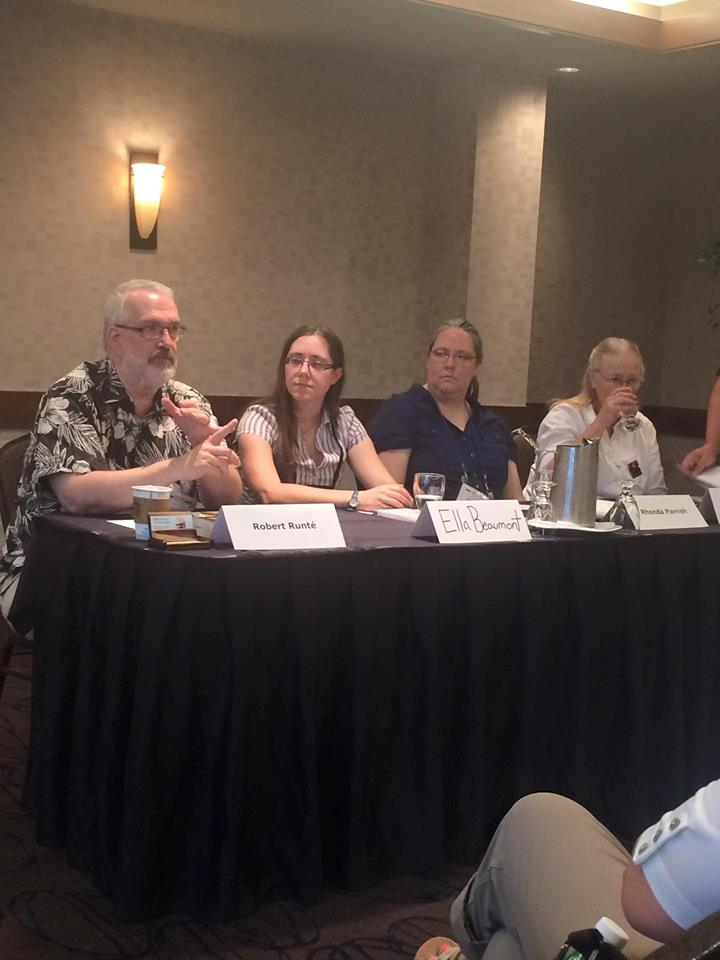
Essential Edits will be at When Words Collide at the Calgary Delta South August 11-13, 2017. Elizabeth McLachlan has had to cancel, but Robert Runté will still be making the Essential Edits presentations and sitting on various panels. Below is Robert's schedule, updated with rooms and times, as of July 5:

Scheduled talks:

Friday 1 PM: Live Action Slush - Early Bird Edition (Panel) in Fireside room

Friday 4 PM: Common Manuscript Problems (Panel) in 1-Parkland

Friday 6 PM: Writers’ + Editors’ Speed Mingle (Interactive) in A-Waterton

Saturday 10 AM: Pantsers vs Plotters (Panel) in 2-Bonavista

Saturday 11 AM: Managing Sustained Writing Projects (Presentation) in 9-Rundle

Saturday 1 PM:Dyslexia, Dysgraphia and the Experience of Writing (Panel) in B-Canmore

Saturday 2 PM: Five Rivers Publishing Presents (Book Launch/Social) in Fireside room

Sunday 10 AM: Live Action Slush – YA Edition (Panel)3-Willow Park

Sunday 11 AM: The Publishers Panel: Novels (Panel) in 2-Bonavista

Sunday 2 PM:Working with an Editor (Presentation) in Rundle

Sunday 3 PM: Blue Pencil (Workshop) 6-Heritage

At 750 attendees, WWC is already sold out for this year. It's always a great writers' convention, so I highly recommend it to anyone for next year.

If you have a membership and are coming, let me know and maybe we can get together in the evenings or between panels (when I have more than a five minute break).

Friday, June 16, 2017

Essential Edits at When Words Collide

Here is a tentative list of workshops, presentations and panels by Essential Edits staff at the When Words Collide writers and readers festival in Calgary, Alberta, Aug 11-13, 2017.

Essential Edits Presentations

  • Managing Sustained Writing Projects, Robert Runté and Elizabeth McLachlan
  • Working With an Editor, Elizabeth McLachlan and Robert Runté

Workshops (requires advance sign up)

  • Blue Pencil Workshop with Elizabeth McLachlan
  • Blue Pencil Workshop with Robert Runté

Panels

  • Live Action Slush - Early Bird Edition with Robert Runté, Michelle Heumann (EDGE SF), and TBA
  • Live Action Slush - Young Adult Edition with Robert Runté, Jennifer Estep (NY Times bestselling YA author) and TBA. Amy Totten (reading)
  • Common Manuscript Problems with Robert Runté, Michelle Heumann (Editor, EDGE SF), Samantha Beiko (Editor, CZP),and Sam Hiyate (Literary Agent)
  • Pansters vs Plodders with Robert Runté, Timothy Gywn (author), C.C. Humphreys (author & swordsman), and R. J. Hore (author)
  • Dyslexia, Dysgraphia, and the Experience of Writing with C.P Hoff (author & Leacock Medal nominee), Aviva Bel'Harold (author), Robert Runté (editor), and Elizabeth McLachlan (editor)
  • The Publishers' Panel: Novels: with Robert Runté(Five Rivers), Samantha Beiko (CZP), Kelsey Attard (Freehand Books), and TBA
  • Writers and Editors Mingle with Calgary Association of Freelance Editors

Book Salon

    Five Rivers Publishing Presents: with Senior Editor, Robert Runté, authors Timothy Gwyn (launching his YA novel, Avians); and C.P. Hoff (author of the Leacock Medal-nominated, A Town Called Forget) and brief readings from Michael Skeet's Poisoned Prayer, Ann Marston's Diamonds in Black Sand, and Joe Mahoney's A Time and a Place.

There are only 74 seats (out of 750) left, so if you are thinking of going, you need to register now.

Monday, February 13, 2017

2016 WWC Guest of Honour Speech


Dr. Robert Runté speaking at When Words Collide.

The When Words Collide writers' conference (held each August in Calgary) has a podcast page on which they release Guest of Honour speeches, panel discussions, and interviews. These are generally well worth a listen.

My Guest of Honour speech August 2016 was just released: "WWC 2016 GOH speech finds the curmudgeonly, retired professor Robert Runté questioning English teachers and praising fan fiction".

Sunday, January 15, 2017

Creating Magic Systems

Guest Post by Edward Willett


Edward Willett is the award-winning author of more than 50 books of science fiction, fantasy and nonfiction for readers of all ages.

The Space-Time Continuum: Creating Magic Systems

Most fantasy stories include magic: that’s what makes them fantasy. (In fact, if I had to distinguish between fantasy and science fiction, I’d say, “The fantastical stuff in fantasy is ascribed to magic. The fantastical stuff in science fiction is ascribed to advanced technology.”)

However, different writers take different approaches to the use of magic in stories. In older books of the fantastic (think The Lord of the Rings), magic is (in the words of Brian Niemeier, winner of the inaugural Dragon Award for Best Horror Novel in 2016 for Souldancer) “mysterious, ineffable, and unpredictable,” whereas in most modern fantasy, magic is more likely to work “like a technology that we can systematize.” It’s the latter form of magic that has given rise to the term “magic system”: the rules established by a writer of fantasy to which the magic in his books adhere.

The designing of such systems seem to be a topic of endless fascination for those interested in writing fantasy, which is presumably why Niemeier wrote his essay, “How to Design Magic Systems," from which I just quoted. It’s also why I was on a panel entitled “How to Build a Consistent and Original Magic System” at the 2014 edition of the annual—and highly recommended—Calgary writing conference When Words Collide.

The star attraction of that panel was not, alas, me, but rather Guest of Honour Brandon Sanderson, widely acknowledged as among the best at crafting interesting magic systems for his bestselling novels.

Over the years, Sanderson has formulated his approach into laws, three of which (so far) he has explicated on his website, starting with his First Law: “An author’s ability to solve conflict with magic is DIRECTLY PROPORTIONAL to how well the reader understands said magic.”

Sanderson recounts how, while on a convention panel on magic early in his career, he stated as a given that, “Obviously, magic has to have rules,” and was shocked to be challenged by the other writers. They claimed systematizing magic robbed fantasy of its sense of wonder: that sense of the “mysterious, ineffable, and unpredictable.”

Sanderson calls that kind of magic “soft magic,” and he and Niemeier point out the problem it sets for writers: because it has no rules, it cannot be used to regularly solve story problems without becoming a deus ex machina. Since we don’t know what magic can and can’t do, every time magic is used to solve a problem faced by the characters the reader is left wondering why magic doesn’t solve all the characters’ problems—which of course would destroy the narrative.

Systematized magic, on the other hand, which Sanderson terms “hard magic,” operates in accordance with strict rules. Looking at my own books, in Magebane, magic requires energy in the form of heat, so the palace has giant coal furnaces; in my Masks of Aygrima series, magic is literally mined, and most magic-users must have a store of it handy in order to perform magic; and in my Shards of Excalibur series, my young protagonist can dissolve into water and travel anywhere it goes—but only fresh water, and she can only reappear in water deep enough to submerge her (giving swimming pools and ponds an unusually prominent role in the narrative).

These limitations heighten narrative tension, because magic is not always available to solve problems, and shape the plot, as the characters struggle to find ways to use their magic.

Or, as Sanderson puts it in his Second Law: “Limitations > Powers”; it’s by putting limits on magic that you make it interesting. Superpowers are a form of magic, and as Sanderson points out, how dull a character would Superman be if not for his Achilles’ Heel, Kryptonite? (For that matter, how dull a character would Achilles himself have been if not for his famous heel?)

Sanderson’s Third Law is, “Expand what you have before you add something new.” Or, as he sums it up, “A brilliant magic system for a book is less often one with a thousand different powers and abilities—and is more often a magic system with relatively few powers that the author has considered in depth.” This ties in with the previous laws quite nicely. The more magical powers that are available, the easier it is for someone to solve their problems with magic, which may result in a flabby narrative.

Note, despite Sanderson calling them “laws,” they are of course nothing of the sort—more “suggestions from experience.” After all, wizards in the Harry Potter books certainly have “a thousand different powers and abilities,” and limitations seem few, but the J.K. Rowling did all right.

In truth, there is only one absolute law of creating magic systems: it has to result in a better story.

Or, as Niemeier sums it up: “In magic as in everything else, make it fun for the reader.”


Edward Willett's website is www.edwardwillett.com. He also produces a biweekly newsletter which includes excellent advice for writers, such as this post on creating magical systems. You can subscribe for free on his website.

My favorite Willett novel is his space opera, "Lost in Translation": a great fun read, and its anti-racist, anti-war message has never been more timely.

Wednesday, April 27, 2016

Strangers Among Us Anthology

Got my contributor's copy of Strangers Among Us in the mail yesterday. Pretty pleased with the production values, and the company I am keeping in this anthology. The anthology will be officially launched August 12, 2016 at When Words Collide Festival in Calgary (at which, coincidentally, I am Editor Guest. I'm told as Editor Guest I get to do a 15 minute reading, so will have to see if I can maybe read this one..though it might be a little long.)

I had hoped to immerse myself in reading the stories by my fellow contributors this afternoon, but Tigana snatched it out of my hands as it came out of the packaging and ran off with it first. (That's her bookmark you can see sticking up from the book—I had to borrow it back to take the photo...)

Sunday, November 1, 2015

Can*Con 2015

I flew out to Ottawa for first time in a decade to take in Can*Con 2015 (The Conference on Canadian Content in Speculative Arts and Literature) which is Ontario's version of Calgary's When Words Collide. Can*Con had very much the same vibe as WWC, but was considerably smaller and therefore more intimate. I loved every minute of it.

I started the convention off with a bang by presenting Joe Mahoney with a Five Rivers contract for his book, A Time and A Place. That was scary for both of us, because I hadn't actually finished reading the manuscript, and Joe wasn't sure he didn't want to go with one of the big five.... But I liked what I had read so far, and my editorial assistant at Five Rivers, Kathyrn Shalley, had read it all the way through and recommended we buy it, and there is no point in having an editorial assistant if you don't trust her judgement and let her assist you. (And knowing Joe was either the producer or the story editor on the best SF ever to come out of the CBC didn't hurt either!) For Joe's part, he found himself taken aside by a couple of writers in the consuite who told him, 'if you find an editor who 'gets' your writing, take your book there!" Apparently he thought that good advice!

Joe Mahoney signs with Five Rivers

Considering that these days almost every stage of book publishing, including the negotiations over the contract, are conducted via email, it was a unique pleasure to actually meet and sign in person. An actual paper contract, not a scanned PDF....

Joe and I hung for most of Friday and Saturday, joined by various interesting folk. I met so many authors and editors, some of whom I knew virtually, but many of whom were completely new to me. Of course, that was the point of going out: to show the flag for SFeditor.ca and Five Rivers; and to spy out the lay of the land.... Some very interesting small press publishers out there. I already knew Bundoran, Dragon Moon and Tyche, of course, though this was the first time I've met Dragon Moon's managing editor, Gabrielle Harbowy. But it was a blast meeting Kristin Hirst (and her Dad) from Pop Seagull, for instance. And so many writers...Sorry CZP had to miss due to illness.

I did a couple of panels (How to Pitch Your Novel, and one on the History of Canadian SF with Jean-Louis Trudel and Allan Weiss; I did three rounds of Five Rivers Pitch sessions; a couple of Blue Pencil Cafés and a reading as part of the mini-launch of Playground of Lost Toys (from Exile Editions). Must confess I was a bit intimidated by readings by Kate Story, Claude Lalumiere, and Mellisa Yuan-Innes whose stories were all completely fabulous, and Derek Newman-Stille's introduction....Had to miss David Hartwell's panel on history of Science Fiction; readings by some other authors I really wanted to hear, but there was just something interesting every hour and I couldn't do it all. I did get to a panel with Ed Willett, Ryan MacFadden, Gabrielle Harbowy based on CBC's "Adults read things they wrote as Kids". It was a pretty awesome time — though Ed Willett's voice can make anything sound fabulous...

The con was very well organized. Trains all ran on time. I really liked the design of the Blue Pencil Workshops / Publisher's Pitch sessions which were set up in an area where one volunteer (three cheers for Kerri Elizabeth Gerrow) was able to run all four sessions simultaneously. And registration was not just hyper efficient (e.g., tracking me down to correct the error printed on my panel schedule so I could be where I was supposed to be...), they were also totally enthusiastic — all smiles all the time.

The Sheraton as the venue worked well for me. I heard some grumbling over the cost of the restaurant, the lack of alternative places to eat nearby, but I personally really liked the hotel restaurant. I guess the food was bit pricey, but worth it. I don't mind paying when the quality is there: best steak sandwich in a long time.

Did lots of work for Five Rivers, got a couple of potential customers for SFeditor.ca, and totally enjoyed myself.

I'll try to get back next year. Highly recommend the Can*Con to any writer/editor/etc out there.

Thursday, August 27, 2015

Editor Guest of Honour at When Words Collide / Canvention 36

I am deeply honoured to have been chosen as the Editor Guest of Honour for the When Words Collide Festival (Calgary), August 12-14, 2016; which is also that year's Canvention, the Canadian national SF&F convention at which the Aurora Awards are presented. Previous Editor GoHs at WWC have included Adrien Kerr (Editor of Commercial Fiction at Penguin Canada) and super literary agent, Sally Harding, so I feel I am in very distinguished company.

I have been Fan GoH at various conventions back in the 1980s and 90s, culminating in Fan Guest of Honour at the Worldcon, but this is the first time I've been invited as a pro Guest, so that's pretty special to me. I had always dreamed of being a pro GoH, though back in the 80s I assumed that it would be as a writer, not an editor. (But apparently, you have to actually finish your novel to qualify as an author guest.... as I have admitted many times, editing a novel is a lot easier than writing one.)

I find it fascinating how many of the fans I did zines with back in the 80s have subsequently gone on to become pros. We were just kind of goofing around, but I can count four with published novels, two who became editors, and one who became a prominent book designer. I can't help wondering if Facebook or Twitter or Tumblr will produce the same % of next generation authors....

Anyway, excited but a little intimidated by the opportunity--Sally Harding's GoH speech at this year's WWC was wonderful: funny, insightful, and uplifting. Tough act to follow!

I'll do my best.

Monday, August 17, 2015

When Words Collide Festival Report

When Words Collide (Calgary) convention was once again wildly successful, with great programming, wonderful Guest of Honour speeches, and 650 wonderful-to-meet-and-talk-with attendees. Small enough convention to feel 'intimate', but large and diverse enough that one constantly learn new things. The cross-genre format of WWC leads to a lot of cross-pollination. (For example, the launch of Sleuth at WWC this year, a new mystery magazine from the people who have put out On Spec SF&F magazine for the last 25 years. Would that have happened if there hadn't been a WWC to bring those folks together?


Five Rivers author, Susan Bohnet, reading from My Life as a Troll at WWC.

Highlights for me of 2015 edition were:

  • Robert Sawyer presentation: I've always made a point of getting to Rob's sessions and have heard him many times at various conventions over the years, but every time he manages to deliver something completely new and insightful. This time he talked about lessons learned over his 25 year career, and aside from some wonderful anecdotes, he drew out a half dozen extremely useful morals for any writer, including:
    • Don’t try to write for everyone; write for that narrow section of the market for which you are their favorite author. The example he gave was that every writer's workshop tells you to avoid 'info dump'. But Rob's fans love information, so info dumps in Rob's writing is not a mistake, something he and his editor missed, but a requirement. (Kind of a revelation for me. It's not a bug, it's a feature! Sorry for ever doubting you man!)
    • Avoid Parawriting Activities. Rob gave several examples of how writers get so wrapped up in being writers--volunteering for writing organizations, giving talks on writing, tweeting out writerly tweets--that they forget to write. You're a writer when you're writing; everything else is distraction. [I'll add the industry standard here is that writers should schedule 10% of their time for community development to give back, and to develop the community of readers necessary to sustain the industry (e.g., school readings.) I don't think Rob was talking about that (since he does more to help new writers than most people I know) but was saying not to get carried away.]
    • Closely related, stay off line. Okay to tweet when one has a new book release, but otherwise it is a trap. Good advice, but like dieting, difficult to follow.
    • Sawyer has done 350 TV and 350 radio interviews so far (and he noted that it was interesting both media were neck and neck here.) What publishers look for is someone who can get "off the book-page coverage". Appearing on book review page is not that helpful because nobody is actually reading that page. So, to get off the bookpage onto the news, you need to write about the hot topics so can be interviewed about that topic every time it comes up. The strategy obviously works for Sawyer, not sure it would work for me. It also helps if you have some journalistic/media background and a good voice like Rob.
    He had more to say, but those were the highlights for me personally.


    Marie Powell reading from Hawk at Random Readings session.

  • Mark Leslie Lefebvre Director of Kobo's Writing Life program: Again, I always seek out his sessions because he has access to current insider data on publishing trends. Where the rest of us try to guess what's hot, he can tell you down to the nickel (or yen, or Euro) what's selling and what's not; how different price points affect sales; whether "free first in series" promotions work; where books sell—with the very clear message that we have to stop just looking to the US in a global market; and so on. I also greatly appreciate his honesty in weighing out the relative benefits of traditional/smallpress/self-publishing, and similarly, the relative merits of Kobo/Kindle/Amazon etc. But really, it you're going to self-publish, Kobo's Writing Life is the place to start. (I had known of Lefebvre before Kobo recruited him, and I said to anyone who would listen, that was the smartest hiring decision ever made by any corporation. A writer and booknerd of the first order, he is on the authors' side, and as a former Chapters manager and former manager of the McMaster University bookstore, the guy understands authors, booksellers and consumers better than anyone else in the country –including 'Heather'. When I finally met him in person at an early WWC, I discovered he is also a really great guy.)

  • Marie brought cookies!

  • Five Rivers Book Launch: Marie Powell's Hawk and Nowick Gray's Hunter's Daughter. I had ten copies of Nowick's book, and a bunch of other recent 5R titles, but only 3 copies of Marie's Hawk made it to the conference. Disappointed, but at least we had a copy to hold up and one for a photo-op of "first copy sold". Attendance was down from last year, but not unexpected given that the new WWC venue allowed for several additional streams of programming with which launches had to compete. I understand the other publishers had a similar decline in launch attendance. We might want to move to a different format for next year. But we can hardly fault WWC for being too interesting....
  • 5R Book Launch: Robert Runté (left); Nowick Gray (center); Marie Powell (right)

  • Meeting Jill Cabrera, Five Rivers Social Media / Promotions staffer, in person. In this day and age of virtual corporations, we have staff members in four different cities, so pretty great to actually spend time at same event. Jill came down from Edmonton to help out with the 5R book launch and other 5R promotions.
  • Similarly, great to welcome Kim Greyson to 5R editorial team. Kim is taking over editing of the PM of Canada series. I met Kim at a previous WWC, and through those conversations realized he was perfect candidate for our new editor position. Kim has previously been a first reader for authors such as Dave Duncan as long as I have, and done some freelance editing for Tor.
  • Seeing Sandra Kusturi and Brett Savory from CZP press again and getting to have breakfast with them and CZP author GMB Chomichuk. I bought Chomichuk's graphic novel, and he kindly drew original cartoon on the flyleaf of his interpretation of CZP logoguy. Sooo coooool!

    Photo by Brett Savory

  • I was on the publishers panel along with Mark Lefebvre (who moderated), Sally Harding (this year's editor guest of honour and super agent!), and Romance acquisitions editor,Danielle Rayner, from the Southern California. Nice diverse group there, but best moment for me was when Stacey Kondla spoke up from the audience to challenge something I had said. I love it when I learn something new, and clearly what I 'knew' was out-of-date. (In my defence, everything any of us knows about publishing is out of date by the time we say it a second time, so, yeah: why one needs to attend WWC to stay current.) But such a collegial environment,
  • I did two bluepencil café sessions and was impressed by overall quality of what I was seeing. Told two of those attending to send me manuscripts if they were interested, they were that good. My experience has been that the quality of writing of those attending WWC improves every year, either because in attracting more out-of-province writers, those tend to be more experienced writers; or because, the regular attendees are getting to be better writers thanks to what they're learning at WWC.
  • I sat on the Early Bird Live Action Slush session, wherein authors anonymously submit first page of a story/novel, and a reader (in this case the fabulous voice of author Edward Willett) reads out the page while the panel of editors listens. Each editor then raises their hand when they would have stopped reading because the number of problems had reached critical mass to move the manuscript to the 'reject' pile. The reader stops reading when 3 of the 4 hands goes up. (Sort of like the gong show if you're old enough to remember that.) Of course, the object is for one's page to get through with no hands up, at which point author has option of claiming ownership and taking a bow. The point of the panel, of course, is to show authors common mistakes they're making and the sorts of things that drive editors crazy; but also to see that what one editor hates, the next might be fine with (so pick carefully to whom you are submitting your manuscripts.) Was slightly embarrassed that one of the manuscripts I trashed turned out to be by one of my own author's, but it was okay because she was aware this new piece had problems, was hoping panel could articulate what that might be. (I can see the problem, but am at a loss how to fix it. Sometimes writers come up with issues I'm not good enough to fix because they are, frankly, challenging themselves to reach a level above my own ability. Which is why you want a press with more than one editor....Lorina is the one who edits this author.)

  • Five River's author, Candas Jane Dorsey, was at WWC, but everyone was focused on her too cute dog.

  • Had a pitch session. Five minutes is too short to really make a decision, so have asked these be lengthened to 12 minutes in future; Randy said he may give publishers the choice in future of 12 or 5 minute format, since others have expressed preference for 5 minutes. Again, high quality pitches, with me asking to see several manuscripts. Several others who had been on the waiting list and not made the session pitched to me in the hallway to same effect.
  • Attended several readings, particularly of new writers so I can monitor who is being published by whom, and to scout possible authors I might want to work with. Really love the 15 minute "random readings" session, because cram a lot of newly published writers into 3 hour slot.
  • I love WWC because I get a lot of work done there. In addition to the 15 or so pitches from authors, I sought out five other authors and asked for them to pitch. (I had asked to see a sixth, but stupidly forgot to hit 'send', so found my email still sitting there that evening when I got back to my room—wondered why she hadn't responded.) I look to get four to five book deals out of the weekend, plus some tentative discussions about setting up an audiobook cooperative; plus talking to two of my authors about how their books were coming; plus sitting down with the coeditors of an anthology to which I've submitted to talk about the changes they wanted to my story; and taking to two other editors about my submitting to their respective magazine/anthology. So yeah, very productive weekend. I calculate that I get about six months worth of deals/work every WWC. And that's all on top of how much I enjoy the conference personally.

  • Five Rivers author, Susan MacGregor, at When Words Collide 2015.

    There were also the panels I hated to miss but had to, either because I was myself on a panel/giving a workshop, or because I didn't know how great it was going to be until after I heard other people rave. An example of the latter was workshop on "How to do a Chapters/Indigo book signing session" by Chapters manager, Stacey Kondla. Talk about useful!

    Fail: Of course, not all panels out of a three day, 11 track program can be wonderful. I knew better than to attend a session entitled "Readability" (because fundamentally a wrong-headed concern) but colleagues that did were shocked and appalled by presentation based on rhetorical questions with predetermined (and largely wrong) answers, rather than, you know, actual data. Well, in a democracy everyone is welcome to their own opinions, so no criticism of the WWC programming here: I wouldn't want them to censor out this presenter just because I think she represents the forces of darkness. (Well, the forces of stupidity, but you get my point.) I do worry a bit that beginning authors will be taken in by such self-styled experts. My personal opinion is that dumbing down your writing will not increase sales, but on the contrary, means that editors like me will simply reject your work before it can see print. Pretty obvious to me that people who accept rules like "only five semicolons in a manuscript" end up doing vanity self-publishing. But, you know, your mileage may vary.

    It raises a point that author Barb Geiger has made to me: if you go to craft fairs, it's not the crafters who make sales, it's the guys selling the beads to the hobbyists who rakes in the cash. I think we're seeing the same phenomenon in publishing these days. The people who are selling 20,000 copies of their self-published books are not the novelists, but the people writing books entitled, "How I Sold 20,000 of My Self-Published Book". You know?

    So all in all, WWC was and is a fabulous convention I cannot praise too highly.

    Robert Runté talking to WWC Board Member, Cliff Samuels, at Dead Dog party (i.e., after convention party, last night of festival.) Photo by Kirstin Morrell.

    Saturday, August 16, 2014

    When Words Collide Festival, 2014

    Once again, I really enjoyed When Words Collide writers/readers convention. I always love the convention itself, but this year I also took in the pre-conference workshops. The first day-long workshop was presented by Adrienne Kerr (Senior Editor at Penguin Canada) followed the next day by two half-day workshops by Mark Leslie Lefebvre (Director of Self-Publishing and Author Relations at Kobo). Both sets of workshops were insider looks at the publishing industry. What I absolutely could not believe was that the workshops were only $40 a day, for speakers that could easily command ten times that much. Randy McCharles and the WWC Board are committed to keeping things affordable for writers, so only charged enough to cover the costs of the conference space for the workshops and the hotel expenses for the speakers; both speakers donated their workshops for free. Hats off to everyone concerned!

    At a break in Adrienne Kerr's (Senior Acquisition Editor, Commercial Fiction, Penguin Canada) day-long workshop at When Words Collide Festival, Calgary, Aug, 2014. L to R: Ron Freidman, Calgary SF author; Connie Penner, Lethbridge author who recently signed with Five Rivers; editor and author Elizabeth McLachlan; Robert Runté; Five Rivers author Susan Forest; Canadian SF author Robert Sawyer; and WWC convention chair, Randy McCharles.

    The actual convention was similarly affordable and wonderful. I was on a bunch of panels, ran a blue pencil workshop, a Five Rivers pitch session (the convention is one of the few places we look at submissions outside our Feb reading period), was one of four judges for the Robyn Herrington Memorial Short Story Contest; and Five Rivers held a seven-book launch Sunday afternoon. So a full working weekend for me, but a very rewarding one.


    One sign of how productive WWC has been for me over the years is that one of the books launched at the Five Rivers launch session this year was "My Life as a Troll", first pitched to me at the very first WWC.

    I also enjoyed the keynote speakers and their various presentations. Most impressive was Brandon Sanderson. I frankly had no idea who he was prior to WWC, but I sat with him on the first panel of the convention and I thought, "Hey, this guy is really good! I'm going to have to look up this guy's books." Well, he just seemed like a regular guy; if anything, a bit nicer than usual, the sort of guy you'd really like as a neighbour. No pretensions at all. And then I heard him talk, and well, he'd be a totally awesome neighbour. Am definitely going to have to pay more attention to his books, if his public speaking is any indication of his talent.

    I also had opportunity to hang with some of the Five River authors, author/editor friends from across the West, and so on. What makes WWC better than most other similar conventions is the cross-genre nature of the programming. I met so many other interesting writers, including for example, Sarah Kades, a romance writer who I would never have encountered in my normal work week since Romance is one of the genres neither Five Rivers nor I take on. What a positive, upbeat person: she actually convinced me to take a copy of her novel. And similarly, I connected with a bunch of mystery writers (great for Five Rivers new mystery line) and a couple of CanLit people...just marvelous networking opportunities at every turn.

    I've already registered for next year, though the dates may conflict with a family obligation that would take priority. Well, the $45 advance membership is worth the risk because the convention sold out well ahead this year, and is likely to again next year in spite of its again moving to a larger venue. I will certainly go if I have any opportunity to do so.

    Next up: I'm planning on going to V-Con (Vancouver) in October, the gods willing.

    Tuesday, April 8, 2014

    When Words Collide, Aug 8-10, 2014

    I will be going to When Words Collide in Calgary again this August. I'll post my schedule at the convention closer to the dates when times have been confirmed, but it looks like I'll be doing close to 10 sessions. Key among those will be the Book Social for Five Rivers Publishing (in my other hat as 5R Senior Editor) where we will be launching all six of Five River's spring releases.

    I will also be doing a 'pitch' session where people can pitch their books to Five Rivers, and I'll provide feedback on how to improve their pitch, in addition to screening for manuscripts 5R might be interested in. Interestingly, one of the books being launched at WWC this year is indeed a book that was pitched to me three years ago at the first WWC.

    I highly recommend When Words Collide to any writer (or serious readers) who can get there -- I consider it the finest writers convention in Western Canada, certainly the best for anyone working in commercial genres of SF/Fantasy, Romance, Mystery, etc., but even poetry, canlit and screen plays have been well represented in the past.